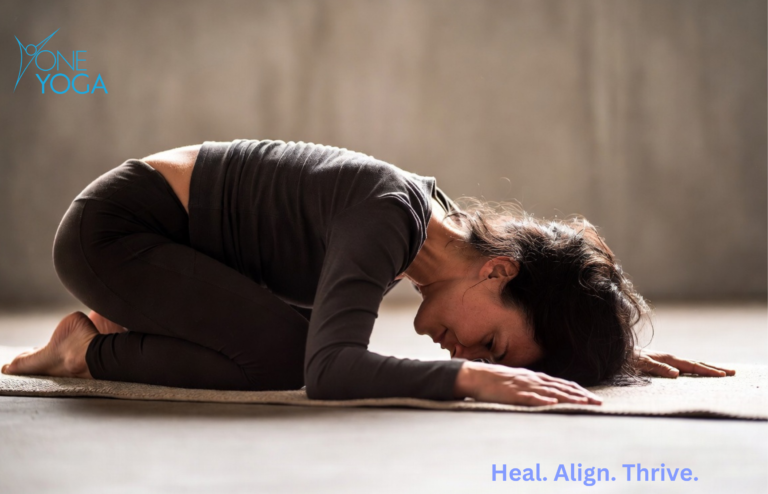
Almost nobody walks into my class because they’re stressed. Let’s be honest about why people actually show up: they want to look better, they want to feel healthier, get out of pain, or they want to age gracefully. That’s usually the real list. Stress relief doesn’t sell a class, and it’s rarely the reason someone shows up.
The stress usually gets handled somewhere else first — or people try to have it handled. A drink to take the edge off. A prescription. A therapist. And for a lot of people, therapy is a genuine part of the answer. But when it isn’t enough on its own or isn’t suited to their temperament, they end up on my mat for a completely different reason — vanity, pain, aging — and they find out almost by accident that something in their nervous system has shifted too. They sleep better. Their chest isn’t as tight. Their doctor comments on their blood pressure getting so low they are taking them off of the meds. Almost no one signs up for that part. It just happens, because of what this practice does to relieve your stress.
It’s Not Just in Your Head — It’s in Your Vagus Nerve
Here’s the piece most yoga classes never explain: stress is more than a feeling, it’s a nervous system state. When you’re stressed, your body is stuck in the sympathetic mode of fight or flight – even when there’s no tiger chasing you. One way out of that state runs through your vagus nerve, the longest nerve in your body and the main highway of your parasympathetic system, the part responsible for rest, digestion, and calm.
Research has shown that slow, controlled breathing and flowing, meditative movement — the kind built into the style of yoga I teach — measurably stimulates the vagus nerve1 and shifts the body toward a calmer state.2 That’s not a metaphor. It’s a physiological switch3, and it’s one of the reasons a single class can leave you feeling like a different person than the one who walked in.
What a Class With Me Actually Looks Like
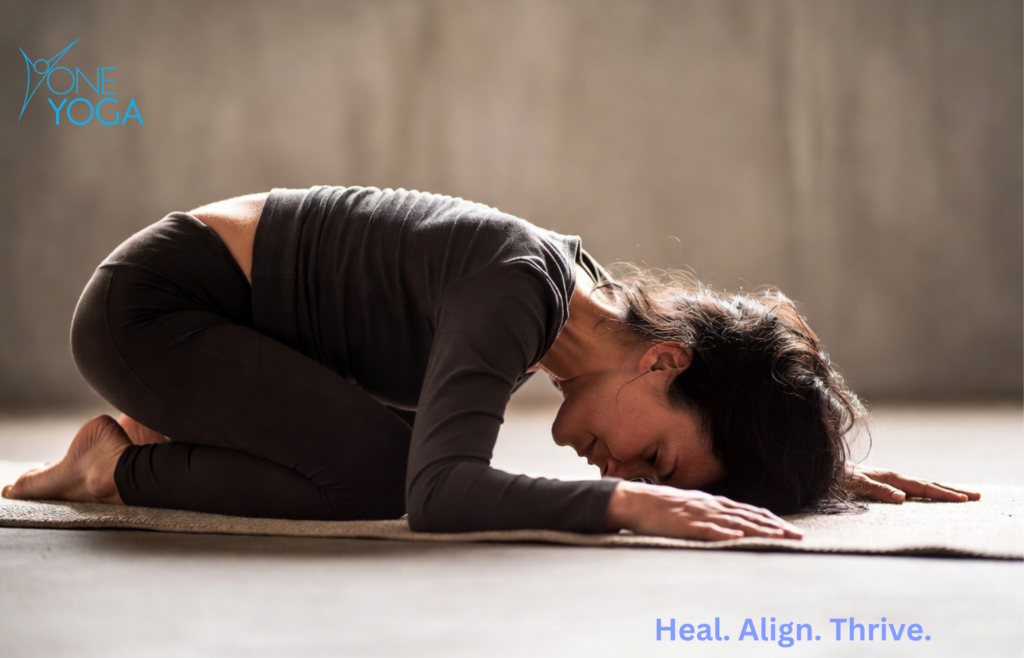
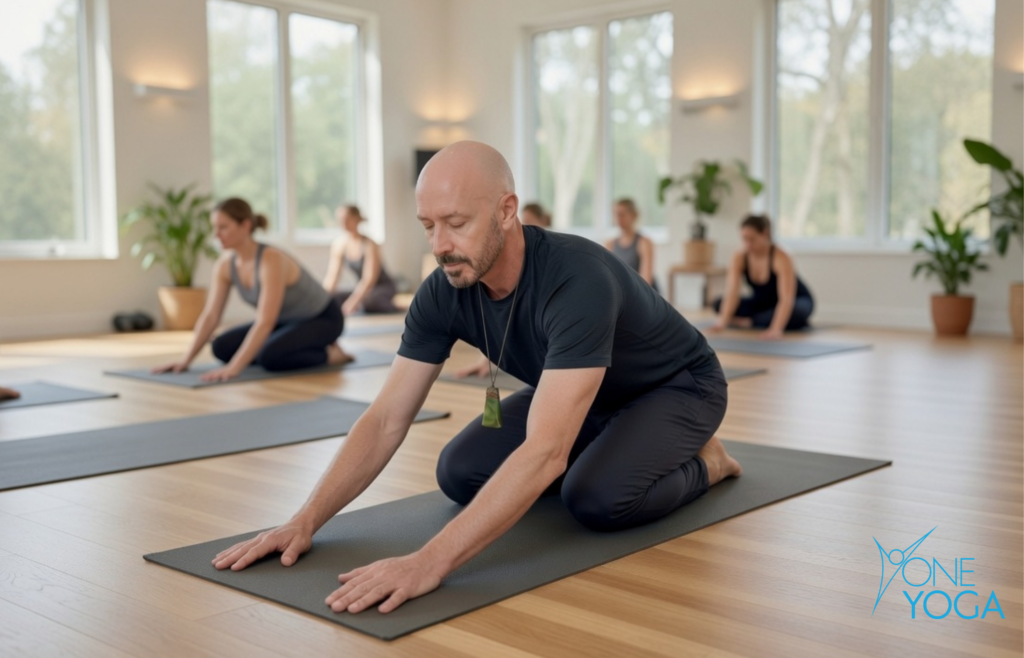 Stretching and Relaxing[/caption]
I build every class around three layers working together: breath, stillness, and movement.
Pranayama (breathing exercises) comes first, because your breath is the fastest lever you have on your nervous system. A few minutes of intentional breathing before you even move can start bringing your heart rate and blood pressure down.
Meditation gives your mind somewhere to land. You don’t have to “clear your head” — you just have to give it one thing to focus on instead of everything at once. That alone is often the most stress-relieving part of the hour.
The postures build strength, endurance, flexibility, and balance — but they’re doing double duty. Physically demanding poses held with steady breath teach your body to stay calm under load, which is exactly the skill you need when real-life stress shows up. I also arrange every class to stimulate all 7 chakras, move the spine in all directions, engage in full and healthy ranges of motion, and to include safe inversions.
What I’ve Watched Happen
Over decades of practice and teaching, I’ve watched this play out again and again, with things like blood pressure, stress, insomnia, acid reflux and more. I’ve had numerous students whose blood pressure came down significantly through consistent practice — in a few cases enough that their doctors, watching the combination of medication and training, adjusted or discontinued their prescriptions rather than risk it dropping too low.
I have that documented in writing from some of those students. I’m not sharing that to make a blanket promise about what will happen to you — everyone’s body and medical situation is different. I share it because it’s real, it happens in my classes, and students are always encouraged to consult their doctors. It’s a good example of how strongly the body responds when stress gets addressed at a deep level.
Drawing From Multiple Traditions
My own practice pulls from many lineages — the awakening energy work of Kundalini, the patient strength-building of Hatha, the precise teachings of Sivananda yoga, Taoist Qigong and more. I teach what works, pulled from decades of study in yoga, Traditional Chinese Medicine, acupuncture, herbology, and psychology, and shaped around the people in front of me.
That’s the whole point of what we do at 1Yoga. We customize a practice around your body, your stress, and your health, and in collaboration with your medical team when that’s what you need.
Whether you come to look better, feel younger, or become stronger, the stress you are feeling gets washed away as radiant health becomes a side effect.
Share below and tag someone who needs this reminder. Your reminder may trigger the change they need. If you’re ready to take this deeper and transform your life, come play with us. We meet Friday and Sunday mornings for Sunrise Yoga on the beach in East Boca from 6:45 to 7:45 AM at the South Beach Park Pavilion. If you would like to join, sign up via Eventbrite or Meetup.
Breathe. Drop in. 
Sending love.
Heal. Align. Thrive.
—Dr. Sattva
1yogawellness.com
yogapainmanagement.com
Endnotes:
1. Gerritsen, R.J.S., & Band, G.P.H. (2018). Breath of Life: The Respiratory Vagal Stimulation Model of Contemplative Activity. Frontiers in Human Neuroscience, 12, 397.
2. Kromenacker, B.W., Sanova, A.A., Marcus, F.I., Allen, J.J.B., & Lane, R.D. (2018). Vagal Mediation of Low-Frequency Heart Rate Variability During Slow Yogic Breathing. Psychosomatic Medicine, 80(6), 581–587.
3. Streeter, C.C., Gerbarg, P.L., Saper, R.B., Ciraulo, D.A., & Brown, R.P. (2012). Effects of Yoga on the Autonomic Nervous System, Gamma-Aminobutyric Acid, and Allostasis in Epilepsy, Depression, and Post-Traumatic Stress Disorder. Medical Hypotheses, 78(5), 571–579.